It is that time of year again. Another birthday is fast approaching and the reminiscences begin. This year they are mainly being triggered by a book: Neil Gaiman's short story collection Smoke and Mirrors. I started reading it the other day and am making very slow progress. Mostly due to the fact that almost every story seems to have some line or other that will conjure up old childhood memories. Mostly not the bad kind - ones I usually don't think very much about. It is very distracting. It is also nice to be reminded every once in a while that my childhood was not all tears and fears. At least not until the god-awful adolescence. Negativity is simply a bit of a stage hog. Then again, that may just be because I am a natural born pessimist. It runs in the family. Sigh.
Anyway, the first of those distractions came at me courtesy of the very first story, still in the introduction: the fairy tale wallpaper I had in my room when I was very little. I loved that thing to pieces. I used to stare at it, recount the tales that went along with the depictions, and made up how they would interact with one another - juxtaposed as they all were in the pictures on the wall. I was so heartbroken when we finally had to take it down. I remember all this, but when I try to picture exactly what it looked like, I draw a blank. All that is left is a vague idea. So I put the kindle down, because I couldn't pay attention to the story anymore and went through all the old photos trying to find a picture of it. Sadly there is none.
Then I went and asked my parents. They remember putting it up and everything: I was two, my sister's age was still counted in weeks, and we had just moved out of my grandparents' place. Huge changes for me - particularly concerning the attention I got (minus two sources plus one fierce contender). So the idea was to surprise me with this and make having to have my own room seem more like a positive development. Yes, when you are two, kind of clingy, and have just experienced a considerable drop in popularity, your own room is pretty much the last thing you want. The fairy tale wallpaper was essentially a bribe.
All of this background my parents can help me reconstruct - background that adds nuance to my idea of the wallpaper or it's character if you will. What they can not give me is a description detailed enough to help me see it any more clearly. So the image is lost (at least to me), but the significance lasts. Even without a face, the wallpaper is still a full fledged character in my life.
That thought gives me pause, because this seems to happen with people as well. I can not picture what somebody looked like so much as what they ... felt like? Granted it is not all gone. I can usually conjure up some vague humanoid outline with a few key characteristics. And curiously enough, I actually do better than average at face recognition. But picturing someone and recognizing them are two very different things as far as I am concerned. People in the realm of my mind are just much more bundles of characteristics and memorabilia than faces and appearances. I wonder if that is just me. I certainly care a lot less about what book characters look like in movie adaptations than anyone I know.
I am also aware that this particular circumstance has hindered my artistic pursuits considerably have always had trouble drawing anything without photographic reference. And I wonder if my writing is better or worse because of it. To me anyway physical descriptions are for the most part noise, unless of course they carry a deeper significance.
Showing posts with label Perspective. Show all posts
Showing posts with label Perspective. Show all posts
June 27, 2015

May 8, 2015
On Caitlin Doughty's Smoke Gets in Your Eyes and My Struggle with Mortality
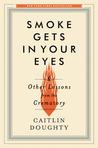 Smoke Gets in Your Eyes: And Other Lessons from the Crematory by Caitlin Doughty
My rating: 5 of 5 stars
Amazing! Fascinating. Thought Provoking. Moving. And so very Necessary. I think the fact that it took me a couple of weeks to even get up the courage and watch an Ask a Mortician Youtube video says a lot about how much I needed this book.
I vividly remember the very moment I realized that we are all gonna die some day and how I immediatly wished to unknow this again. Of course this is the kind of thing you can never unknow again. And thus I have been struggling with mortality ever since my kindergarten days - having panic attacks on a semi-regular basis. And I waited for a good day – a day I would be able to handle these videos without plunging into another panic attack. I need not have been so worried. In fact, I could have spared myself a lot of anguish had I just gotten up the courage to look sooner. Because as it turns out the only thing that really helps with the things that you can not unknow is to know more.
And yet the approach the western world in general and - as Caitlin Doughty illustrates - america in particular takes is quite the opposite. We do everything in our power to avoid any confrontation with death. We avoid talking about it as much as possible. We hide dead bodies off stage behind the curtain. We even try to find the “cure” for it. As a history student I am well aware how bizarre it is that I managed to be alive for almost 29 years without ever having seen a dead person – even though I have been to more funerals than weddings. But the thing is, in Germany, too, these things are more like memorials nowadays. There is no dead body at a funeral anymore – only a closed coffin or an urn. And nothing actually gets buried.
So death in effect has been reduced to the absence of a person in our lives as opposed to the absence of life in a body. Without this book it never would have occurred to me how much of a difference this little distinction makes. Now I see how grossly I have misinterpreted the myth of Orpheus and Eurydice and how much we have become like the petty gods of the Iliad. I am serious. When you really think about it you'll have to admit that people in modern western societies have a lot more in common with the gods in that story than with the humans. That is because we seem to think ourselves at least potentially immortal. So deeply are we in denial about our own mortality. Yet we still die. And every time we do we experience it as essentially unnatural. Death is not part of our life. It is a glitch. We don't see it as something that needs to be accepted, but as something that needs to be fixed.
Smoke Gets in Your Eyes is the account of Caitlin Doughty's own journey towards an understanding of death and how contemporary America and by extension western societies chose to deal with it. She shows how flawed and unhealthy these attitudes really are, how they evolved alongside the rise of the funeral industry and our euphoria in face of the great advances in public health and medicine, and how we would profit from a more realistic understanding of and engagement with death. I very am glad that I got to vicariously experience this journey through the guidance of her kind and witty words. I laughed and I cried (did not have a panic attack) and I think it is fair to say that this book changed my life.
View all my reviews
July 29, 2014
On Harry's Last Stand and Insights where You Least Expect Them
 Harry's Last Stand: How the World My Generation Built is Falling Down, and What We Can Do to Save It by Harry Leslie Smith
My rating: 4 of 5 stars
I must admit that when I first saw this book and it's title, I assumed this would be the usual rant us younger folk expect from the elderly - you know about how easy we have it and how lazy we are and yada yada yada. So I did not bother to look any further until I saw this interview with him that justkissmyfrog posted on her youtube channel.
He was nothing like I imagined him to be. He was funny, compassionate and still so in touch. Yeah, we do not really expect that from the elderly. And as with all generalizations it is obviously not true across the board. I am a little ashamed of my initial judgement. Especially with my background I should be more aware of prejudices. But alas I realized my mistake and turned to his book for more of what he had to say.
And boy did he have a lot to say and in such a charming manner. He really lived a remarkable live that would have been a shame to be lost to oblivion. But he has got a nobler reason for telling his story than fishing for compliments or sympathy. He uses it to illustrate a point about our current state of affairs and the course we are on - not just in Britain, but across the board.
I certainly recognized some of the issues to be akin to some here in Germany. But while I for the most part did share his opinion even before I picked up this book, I never thought to look at it from quite this angle. That did help untangle some of my jumbled thoughts and see the proverbial golden thread running through. So while he does not give easy answers - neither does he claim to - I do have a little more clarity and something to orient my decisions.
Of course, whenever these things sound simple and easy answers are thrown about, you are probably not seeing the whole picture. They are always more complicated and we should be aware of that lest we comply with rash actions or unfavorable agendas.
I suppose the best we can do is to raise awareness, to not forfeit our votes - even if just to delude the less well meaning ones, to try and do more good than harm to the world around us, and, last but not least, to sometimes look beyond our prejudices. We might just hit upon gold where we would least expect it.
View all my reviews
July 9, 2014
On Never Ever Growing Up
I very vividly remember how I told my mom one night when she was tugging me in that I never ever wanted to grow up. And this was not just me being hung up on Peter Pan. I actually meant it ... and I kind of still do.
Back then there were just so many things about grown-ups I was terrified of and things they did I thought I could never do on my own. Like doing my hair and driving a car or dancing in public (unchoreographed that is, like in a club) and all that stuff in between. But bid by bid I learned to do those things or had those experiences and it turns out that some of them are actually a lot of fun.
So do I feel like a grown up now? No. Not yet. And I am actually starting to suspect that I never will. It seems like for every milestone I leave behind another two are rising up before me. Life apparently is not the kind of game where you reach the final level and you have won. There will always be new challenges to tackle. Challenges that are going to make me feel like that scared little child over and over again. Maybe a child that is a little more mature than it's younger version, but a child nonetheless.
So the number of my age gets farther and farther removed from the age I feel. To the effect that I now earn alarmed looks whenever I have to actually think a moment to give my age or even get it wrong. Except today on my birthday, when I will be very aware and weirded out by that stranger of a number.
Back then there were just so many things about grown-ups I was terrified of and things they did I thought I could never do on my own. Like doing my hair and driving a car or dancing in public (unchoreographed that is, like in a club) and all that stuff in between. But bid by bid I learned to do those things or had those experiences and it turns out that some of them are actually a lot of fun.
So do I feel like a grown up now? No. Not yet. And I am actually starting to suspect that I never will. It seems like for every milestone I leave behind another two are rising up before me. Life apparently is not the kind of game where you reach the final level and you have won. There will always be new challenges to tackle. Challenges that are going to make me feel like that scared little child over and over again. Maybe a child that is a little more mature than it's younger version, but a child nonetheless.
So the number of my age gets farther and farther removed from the age I feel. To the effect that I now earn alarmed looks whenever I have to actually think a moment to give my age or even get it wrong. Except today on my birthday, when I will be very aware and weirded out by that stranger of a number.
October 19, 2013
On Really Bad Advice
When I hear people
apologizing for how lame of a phrase “It'll get better”
supposedly is, all I can muster is a rueful smile. Because you know
what I always got to hear? Something along those lines: “The time
will come when you're gonna wish yourself back to this very time of
your life.” Well, if that doesn't make you cheer up and appreciate
what you have. What it did was make me feel kind of guilty for being unhappy
in the first place. And then there is the implication in this
statement that it is - apparently - only gonna get worse – much worse. So that should make you wanna get up in the morning or, you
know, like just put an end to it right away.
But the thing is,
that this is - of course - not quite what the folks were saying. In fact, they
weren't talking about me and my problems at all. They were
essentially projecting the feelings they had about their own
schooldays onto me. Apparently they did fare a lot better than I did.
Go figure. And it seems like they couldn't even imagine that it might
be different for me. I did realize this back then, but that didn't
make the statement any less annoying and hurtful. I mean it would
have helped a lot, if someone had just acknowledged my experience for starters.
Now I at least get
the triumph of saying that they were wrong. It didn't get worse. It
got infinitely better - even though I'm still sort of in limbo at the moment. But I
wouldn't wanna go back to this time of my life if you gave me a
truckload of cash for it. And I'm damn well never ever gonna be going
to any reunion. I just hope there will never come a time when I'd
wanna do go back because I'd pretty much have to hit rock bottom to get to that point.
September 30, 2013
On the Demystification of the Artist
Most of us, at some point or another,
have probably found ourselves truly awestruck regarding a work of art
or a piece of writing, thinking “I wish I could write or draw or
think like that.” Some pieces are just that remarkable. They lead
us to imagine their creators – and by extension all of their peers
– as higher beings, more enlightened than us mere mortals, who
could never live up to that kind of standard.
Like so many of us I used to live with
this kind of mindset. I was so in awe of artists and writers. It was
ridiculous. Without ever being conscious of doing this, I made them
out to be some kind of demigods. Never in a million years would I
have thought that I myself might be able to create something as
beautiful and meaningful as they did. There were just worlds and
worlds between us. And so I never really let myself try essentially
holding myself back.
I don't even remember exactly when that
changed, but somewhere along the way I realized that writers and
artist weren't that much different from us, and that I didn't have to
be Shakespeare or Leonardo freaking Da Vinci to express myself and
create something. I think might actually owe a lot of this epiphany
to Stephenie Meyer of all people. When I saw her in the DVD extras,
she seemed like such an unlikely person to be capable of being an
author. And lets face it, her books are not that well written either
– but she is an author nonetheless. So I thought, why not just try?
So I did, and it was fun. People even liked what I did and some of
them even started looking at me like I actually was one of them
writers now. Who would have thought? Without even the ambition of
ever getting published people thought of me as a writer.
Somewhere along this process I started
thinking about us rather than them. It turns out as small as this
shift of perspective seems, it was actually a quantum leap. Being
able to imagine writers – and consequently artists in general –
as complex mortal beings didn't just help me with my writing. I also
feel like I understand a lot better what they or their works could be
saying.
Because by placing the artist in some
kind of divine sphere, I apparently perceived their works as a lot
more mysterious than they actually were. I as a mere human being was
just not supposed to understand – I was to merely admire and
praise. Taking the creators out of this sphere, allowed me to get
over this mental block and really think. Before that I would probably
not even thought of writing reviews and blog posts.
Since then I also tackled art again –
which I had been neglecting for quite some time – and it is
actually fun, now that I don't hold myself to such ridiculous
standards anymore. Not only that, but it also seems much easier. I
still don't think that I or something I create will ever be god's
gift to humanity. But that doesn't mean that the things I think or
feel are not worthy of being expressed or shared.
August 22, 2013
On Truth and Perception
Isn't it funny that while most everyone thinks they're somewhat unique and special, they simultaneously assume that everybody experiences the world like they do? Everybody is so much in their own world that they rarely even consider that the world might look, taste or feel different to someone else's senses. I'm talking about the perceptions that you can't directly compare - only through the faulty filter of language.
For example people agree that something that looks blue is blue. Because they've both learned, that the hue they see is called blue. But how can you be sure that what you see there is exactly what somebody else sees? This definition is not based on your actual perception. Think about it. How would you describe blue if not with itself. I guess you can't really. Maybe some of our differences in taste can even be attributed to differences in perception. Who knows?
However, there are other things that you can communicate better, but rarely ever think to do. I've had my fair share of experiences with those. When I was in elementary school, for instance, I first got glasses. Before I got them I naturally thought that everybody's eyes worked like mine did. But when I got the glasses, I was amazed at how much there was to see all of a sudden, and I kept wondering at what I've been missing all this time. This babbling of mine about all that sure did freak my mother out. Maybe I even owe some of my character traits or at least some of my interests to this.
Then there was another much more recent experience with this type of thing when I had an argument with my friend about him forgetting a doctors appointment - yet again - and always messing up his scheduling. When I told him how I keep track of my schedule, he looked at me like I had just grown a second head. Of course I thought he was the one that was weird. After all wasn't he the one who was lucky if he didn't forget his own freaking birthday? So I started asking around, and it turned out that it really was me. Bummer.
So - nerd that I am - I went looking for it on the Internet. But how do you google something like this when you don't already know what it is called? The faulty filter of language again. So that is why, when I finally stumbled upon the answer, it was purely by accident. Turns out it's called visuo-spatial synesthesia. It's not an illness or anything, just a different way of making sense of the world. It's still hard to grasp how all these other people can function without an inner calendar like mine or how they calculate without number forms, since I rely on them so much.
The point here is, you can never know that other people see the world like you do. Have you ever noticed how different people tell the same story, but apparently they don't remember it the same way. Does that mean somebody lied? Or did he just experience it in a different way? And doesn't that overthrow the whole concept of truth as we generally envision it?
For example people agree that something that looks blue is blue. Because they've both learned, that the hue they see is called blue. But how can you be sure that what you see there is exactly what somebody else sees? This definition is not based on your actual perception. Think about it. How would you describe blue if not with itself. I guess you can't really. Maybe some of our differences in taste can even be attributed to differences in perception. Who knows?
However, there are other things that you can communicate better, but rarely ever think to do. I've had my fair share of experiences with those. When I was in elementary school, for instance, I first got glasses. Before I got them I naturally thought that everybody's eyes worked like mine did. But when I got the glasses, I was amazed at how much there was to see all of a sudden, and I kept wondering at what I've been missing all this time. This babbling of mine about all that sure did freak my mother out. Maybe I even owe some of my character traits or at least some of my interests to this.
Then there was another much more recent experience with this type of thing when I had an argument with my friend about him forgetting a doctors appointment - yet again - and always messing up his scheduling. When I told him how I keep track of my schedule, he looked at me like I had just grown a second head. Of course I thought he was the one that was weird. After all wasn't he the one who was lucky if he didn't forget his own freaking birthday? So I started asking around, and it turned out that it really was me. Bummer.
So - nerd that I am - I went looking for it on the Internet. But how do you google something like this when you don't already know what it is called? The faulty filter of language again. So that is why, when I finally stumbled upon the answer, it was purely by accident. Turns out it's called visuo-spatial synesthesia. It's not an illness or anything, just a different way of making sense of the world. It's still hard to grasp how all these other people can function without an inner calendar like mine or how they calculate without number forms, since I rely on them so much.
The point here is, you can never know that other people see the world like you do. Have you ever noticed how different people tell the same story, but apparently they don't remember it the same way. Does that mean somebody lied? Or did he just experience it in a different way? And doesn't that overthrow the whole concept of truth as we generally envision it?
July 30, 2013
On Identity and Origins
Has anyone watched the English Patient? Because I recently have, and it got me thinking about identities and the role of nationality. There's this theme when it comes to defining someone's identity in this movie, that is a stark disparity between who someone is according to their name or their papers and the person that stands behind all that. Although there is a lot of international mixing an mingling - or precisely because of that - the primary aspect people in this movie seek when defining any person's identity is apparently their nationality. That is natural in that sort of situation - I suppose - but it forces a role upon the characters, and while some seem to embrace this role others seek to escape it.
Weirdly enough in a western world that seems to have bound together to some extend I can still relate to that. Now, I don't suffer it as much as say Almásy does - thank god - but every now and then when I interact with people from other places, I feel how they are trying to force a role on me based on where I come from. You'd think that nowadays that we westerners eat food and use products from all over the world, watch movies from Hollywood to Bollywood, and converse with people from every which country via the Internet, where you come from wouldn't really make that much of a difference. Now, I'm not saying that my origin didn't leave it's mark on me, but I definitely wouldn't consider it to be among the primary aspects of my identity.
But what then does define my identity? To what extend is identity even definable? Isn't any attempt to "define" someone's identity a fundamental error? Not just because of the multitude of facets, but also because such an attempt usually presupposes the false assumption that identity is a static concept. And am I really gonna relate more to people of my geographic region, religion, gender, age, academic degree or job? Or aren't all of these mere conversation starters? The parts of the Venn diagram that is you and them. But that I think might be the very crux of the matter. Because in the end it seems like who ever attempts the definition is as vital to defining your identity as you yourself are. In a way then how your identity appears to someone is inevitably defined by their own point of view. So once again it all boils down to perspectives, and that means that the role they seek to force on me is probably revealing more about them than about me.
Weirdly enough in a western world that seems to have bound together to some extend I can still relate to that. Now, I don't suffer it as much as say Almásy does - thank god - but every now and then when I interact with people from other places, I feel how they are trying to force a role on me based on where I come from. You'd think that nowadays that we westerners eat food and use products from all over the world, watch movies from Hollywood to Bollywood, and converse with people from every which country via the Internet, where you come from wouldn't really make that much of a difference. Now, I'm not saying that my origin didn't leave it's mark on me, but I definitely wouldn't consider it to be among the primary aspects of my identity.
But what then does define my identity? To what extend is identity even definable? Isn't any attempt to "define" someone's identity a fundamental error? Not just because of the multitude of facets, but also because such an attempt usually presupposes the false assumption that identity is a static concept. And am I really gonna relate more to people of my geographic region, religion, gender, age, academic degree or job? Or aren't all of these mere conversation starters? The parts of the Venn diagram that is you and them. But that I think might be the very crux of the matter. Because in the end it seems like who ever attempts the definition is as vital to defining your identity as you yourself are. In a way then how your identity appears to someone is inevitably defined by their own point of view. So once again it all boils down to perspectives, and that means that the role they seek to force on me is probably revealing more about them than about me.
July 24, 2013
On Empathy and Perspective
When people ask what I do, and I tell them that I'm majoring in ancient history, they tend to look at me funny. They tend to sport an expression that might best be described as a curious mix of disbelief and pity. Some of them even ask how I ended up there - like something must have gone really wrong for me to land in what they consider to be some form of purgatory. But if I'm really being honest, I would probably have had a similar reaction - were history classes from school my point of reference, that is.
Curiously though, history in school was worlds away from the way we approach it at university now. Back then it was a very simplistic picture. A string of dates and facts. Knowledge neatly packed into little labeled boxes, ready to be checked of on formulaic tests. History fell into the category of memorization subjects.
No one ever mentioned that dates particularly in antiquity are often anything but certain, that what was sold to us as facts might still have been up for debate, and that sometimes in view of recent studies those 'facts' become outdated. Because in reality history as it is studied and reviewed is actually a quite fluid concept and it revolves a lot around empathy and perspective.
My parents used to allude to that when they told us that what they had learned in their history classes differed quiet considerably from what we learned - or from what our grand parents had learned for that matter. That is because perspectives tend to change over time. And not to burst your bubble, but none of these perspectives were ever objective, nor are they ever going to be. Some tried more to be objective than others, but I don't think there even is such a thing. Our zeitgeist influences our view of historical events as much as new discoveries do.
Look at the world today. The very same events are experienced in such a variety of different ways. There never is only one truth. Do you really think that looking back from the future is gonna change anything about that? If you tell only one story you're telling the truth as much as you're telling a lie. That, by the way, should also answer those pesky questions about whether or not there are still new things to discover in the study of history or any academic field for that matter.
Anyway, many people instinctively use empathy when they try to understand the lives and experiences of other people and so do historians. Admittedly that can get you a long way, but you'll have to ask yourself, if sometimes you're not too much of a child of your own time and place to really relate. The question is, how much of our nature and experience is fundamentally human and therefore translatable and how much of a role does our culture play in that. In order to answer that, you need to take a step back from your own perspective and that's the hard part. Unfortunately a lot of people can't really do that.
But I don't think you're doing those people from the past justice, if you don't at least try to take into account the full spectrum of their experience and assume that they felt just like you do. An awareness of the flexibility of the human mind and the resulting multitude of perspectives is what will take you to a whole new level of understanding, not just of past cultures but present ones as well.
Curiously though, history in school was worlds away from the way we approach it at university now. Back then it was a very simplistic picture. A string of dates and facts. Knowledge neatly packed into little labeled boxes, ready to be checked of on formulaic tests. History fell into the category of memorization subjects.
No one ever mentioned that dates particularly in antiquity are often anything but certain, that what was sold to us as facts might still have been up for debate, and that sometimes in view of recent studies those 'facts' become outdated. Because in reality history as it is studied and reviewed is actually a quite fluid concept and it revolves a lot around empathy and perspective.
My parents used to allude to that when they told us that what they had learned in their history classes differed quiet considerably from what we learned - or from what our grand parents had learned for that matter. That is because perspectives tend to change over time. And not to burst your bubble, but none of these perspectives were ever objective, nor are they ever going to be. Some tried more to be objective than others, but I don't think there even is such a thing. Our zeitgeist influences our view of historical events as much as new discoveries do.
Look at the world today. The very same events are experienced in such a variety of different ways. There never is only one truth. Do you really think that looking back from the future is gonna change anything about that? If you tell only one story you're telling the truth as much as you're telling a lie. That, by the way, should also answer those pesky questions about whether or not there are still new things to discover in the study of history or any academic field for that matter.
Anyway, many people instinctively use empathy when they try to understand the lives and experiences of other people and so do historians. Admittedly that can get you a long way, but you'll have to ask yourself, if sometimes you're not too much of a child of your own time and place to really relate. The question is, how much of our nature and experience is fundamentally human and therefore translatable and how much of a role does our culture play in that. In order to answer that, you need to take a step back from your own perspective and that's the hard part. Unfortunately a lot of people can't really do that.
But I don't think you're doing those people from the past justice, if you don't at least try to take into account the full spectrum of their experience and assume that they felt just like you do. An awareness of the flexibility of the human mind and the resulting multitude of perspectives is what will take you to a whole new level of understanding, not just of past cultures but present ones as well.
Subscribe to:
Posts (Atom)