Pages

Showing posts with label Life Lessons. Show all posts

May 8, 2015

On Caitlin Doughty's Smoke Gets in Your Eyes and My Struggle with Mortality

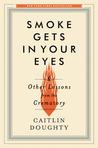
Smoke Gets in Your Eyes: And Other Lessons from the CrematorySmoke Gets in Your Eyes: And Other Lessons from the Crematory by Caitlin Doughty

My rating: 5 of 5 stars


Amazing! Fascinating. Thought Provoking. Moving. And so very Necessary. I think the fact that it took me a couple of weeks to even get up the courage and watch an Ask a Mortician Youtube video says a lot about how much I needed this book.

I vividly remember the very moment I realized that we are all gonna die some day and how I immediatly wished to unknow this again. Of course this is the kind of thing you can never unknow again. And thus I have been struggling with mortality ever since my kindergarten days - having panic attacks on a semi-regular basis. And I waited for a good day – a day I would be able to handle these videos without plunging into another panic attack. I need not have been so worried. In fact, I could have spared myself a lot of anguish had I just gotten up the courage to look sooner. Because as it turns out the only thing that really helps with the things that you can not unknow is to know more.

And yet the approach the western world in general and - as Caitlin Doughty illustrates - america in particular takes is quite the opposite. We do everything in our power to avoid any confrontation with death. We avoid talking about it as much as possible. We hide dead bodies off stage behind the curtain. We even try to find the “cure” for it. As a history student I am well aware how bizarre it is that I managed to be alive for almost 29 years without ever having seen a dead person – even though I have been to more funerals than weddings. But the thing is, in Germany, too, these things are more like memorials nowadays. There is no dead body at a funeral anymore – only a closed coffin or an urn. And nothing actually gets buried.

So death in effect has been reduced to the absence of a person in our lives as opposed to the absence of life in a body. Without this book it never would have occurred to me how much of a difference this little distinction makes. Now I see how grossly I have misinterpreted the myth of Orpheus and Eurydice and how much we have become like the petty gods of the Iliad. I am serious. When you really think about it you'll have to admit that people in modern western societies have a lot more in common with the gods in that story than with the humans. That is because we seem to think ourselves at least potentially immortal. So deeply are we in denial about our own mortality. Yet we still die. And every time we do we experience it as essentially unnatural. Death is not part of our life. It is a glitch. We don't see it as something that needs to be accepted, but as something that needs to be fixed.

Smoke Gets in Your Eyes is the account of Caitlin Doughty's own journey towards an understanding of death and how contemporary America and by extension western societies chose to deal with it. She shows how flawed and unhealthy these attitudes really are, how they evolved alongside the rise of the funeral industry and our euphoria in face of the great advances in public health and medicine, and how we would profit from a more realistic understanding of and engagement with death. I very am glad that I got to vicariously experience this journey through the guidance of her kind and witty words. I laughed and I cried (did not have a panic attack) and I think it is fair to say that this book changed my life.


View all my reviews

July 29, 2014

On Harry's Last Stand and Insights where You Least Expect Them

Harry's Last Stand: How the World My Generation Built is Falling Down, and What We Can Do to Save ItHarry's Last Stand: How the World My Generation Built is Falling Down, and What We Can Do to Save It by Harry Leslie Smith

My rating: 4 of 5 stars


I must admit that when I first saw this book and it's title, I assumed this would be the usual rant us younger folk expect from the elderly - you know about how easy we have it and how lazy we are and yada yada yada. So I did not bother to look any further until I saw this interview with him that justkissmyfrog posted on her youtube channel.


He was nothing like I imagined him to be. He was funny, compassionate and still so in touch. Yeah, we do not really expect that from the elderly. And as with all generalizations it is obviously not true across the board. I am a little ashamed of my initial judgement. Especially with my background I should be more aware of prejudices. But alas I realized my mistake and turned to his book for more of what he had to say.

And boy did he have a lot to say and in such a charming manner. He really lived a remarkable live that would have been a shame to be lost to oblivion. But he has got a nobler reason for telling his story than fishing for compliments or sympathy. He uses it to illustrate a point about our current state of affairs and the course we are on - not just in Britain, but across the board.

I certainly recognized some of the issues to be akin to some here in Germany. But while I for the most part did share his opinion even before I picked up this book, I never thought to look at it from quite this angle. That did help untangle some of my jumbled thoughts and see the proverbial golden thread running through. So while he does not give easy answers - neither does he claim to - I do have a little more clarity and something to orient my decisions.

Of course, whenever these things sound simple and easy answers are thrown about, you are probably not seeing the whole picture. They are always more complicated and we should be aware of that lest we comply with rash actions or unfavorable agendas.

I suppose the best we can do is to raise awareness, to not forfeit our votes - even if just to delude the less well meaning ones, to try and do more good than harm to the world around us, and, last but not least, to sometimes look beyond our prejudices. We might just hit upon gold where we would least expect it.


View all my reviews

July 9, 2014

On Never Ever Growing Up

I very vividly remember how I told my mom one night when she was tugging me in that I never ever wanted to grow up. And this was not just me being hung up on Peter Pan. I actually meant it ... and I kind of still do.

Back then there were just so many things about grown-ups I was terrified of and things they did I thought I could never do on my own. Like doing my hair and driving a car or dancing in public (unchoreographed that is, like in a club) and all that stuff in between. But bid by bid I learned to do those things or had those experiences and it turns out that some of them are actually a lot of fun.

So do I feel like a grown up now? No. Not yet. And I am actually starting to suspect that I never will. It seems like for every milestone I leave behind another two are rising up before me. Life apparently is not the kind of game where you reach the final level and you have won. There will always be new challenges to tackle. Challenges that are going to make me feel like that scared little child over and over again. Maybe a child that is a little more mature than it's younger version, but a child nonetheless.

So the number of my age gets farther and farther removed from the age I feel. To the effect that I now earn alarmed looks whenever I have to actually think a moment to give my age or even get it wrong. Except today on my birthday, when I will be very aware and weirded out by that stranger of a number.


January 12, 2014

On New Year's Resolutions


The Year is already a couple of days old by now and I still keep getting bombarded with New Year's Resolutions left and right. Though I find some people's resolutions rather interesting to know, I'm not a big fan of them. I've never made any actually. I have goals, all right, but they tend to kind of evolve rather naturally all year round and I adjust them once I see how things are going. Because with most goals you tend to under- or overestimate the difficulties you'll be facing. There are always things you just can't foresee and you need your goals to be flexible enough to take that into consideration.

That's also one of the reasons I don't like telling people about my goals at first. It puts you in that all or nothing mindset, because they'll hold you to what you said.  So that instead of being proud of the progress you have made towards your goal, you'll feel like you failed and give up all together. And then there's also some evidence that suggests that for people who are in it for the social appraisal - or whatever you want to call it – the declaration of the goal and the ensuing admiration from other people are satisfying enough and they might not even bother to get started. Like displaying pretentious books that you never intend to read on your shelves. I don't know, if I ever done something of that kind. I don't think so, but my adolescent self was kind … well, I don't get what she was thinking most of the time. And people tell me things that I can hardly believe. So I wouldn't entirely rule it out. It's like I've been possessed for a really long time. Evil spirit be gone.

However, I didn't achieve everything I wanted to before the New Year, but I don't see that as a failure. It's not like I haven't achieved anything. It just means that it's an ongoing process. And considering the circumstances, I'm actually quite satisfied with what I've managed to accomplish last year.

November 18, 2013

On The Manic Pixie Dream Girl Trope and Paper Towns

Paper TownsPaper Towns by John Green

My rating: 4 of 5 stars


I've heard quite a few people criticize Paper Towns for being the cliche manic pixie dream girl story. Having read it myself, that kind of makes me wonder … have we read the same book? I mean, of course it is all ABOUT the manic pixie dream girl trope, since the whole thing is an attempt do discredit this trope. And Green could hardly have been more obvious about it. If anything, I would criticize him for this obviousness. That's somewhat of a reoccurring theme of his (among others). And it might stem from crafting a novel around a concept or idea – like fables or fairy tales – rather than letting the story evolve from the characters. But lots of people do this, and you can usually tell. It's a matter of personal preference whether one likes one or the other approach better. I personally enjoy both kinds of stories.

The most interesting thing about his endeavor is the approach Green took to attack the trope. He could have done it in loads of different ways. But he chose to basically build Margo up as a manic pixie dream girl, only to reveal in the end that it's all just been in Q's head. I think that's why a very cursory reader might mistake this for the actual trope. And in fact, one might wonder what the big difference is? Because that sounds like she basically serves the same purpose that every manic pixie dream girl does: helping “broodingly soulful” Q learn a life lesson that is going to be key to finding his own happiness. Now how's that for a conundrum? A manic pixie dream girl dispelling the myth of the manic pixie dream girl. Except, that's not quiet it, because unlike other manic pixie dream girls, Margo also learns a valuable lesson from the whole fiasco.

I think there is a rather strong indication – indication as in Green spells it right out (That's the obviousness I've been talking about.) - that Margo herself is initially somewhat infatuated with the idea of being someone's muse or manic pixie dream girl. And she initially sets herself up as one. She makes an effort to plant the idea in Q's head, and thinks the thing is done. She thinks she did something to effect an important change in someone's life, meaning that by extension she herself was important in this life she left behind – something she's been doubting for obvious (again) reasons.

What she doesn't reckon with, is how this idea evolves inside Q's head, leading him to recreate her into this larger than life “precious thing” that he needs to save, effectively making him her hero. So essentially they both want the same thing. And that's a problem. Because in order for one of them to be the hero and safe the other, one of them will have to be the damsel in distress. Neither of them identifies as such.

So when they finally meet again, they're both confronted with the implications of what they attempted to create. They learn to see each other as real life people rather than mere tropes and means to an end. And they both realize – Margo a little sooner than Q actually – that a muse or manic pixie dream girl is not what an actual person is, but merely the two dimensional unattainable thing another person makes them out to be – unattainable because real people in all their complexity can never achieve the level of simplicity a fantasy needs to be unambiguously positive.


View all my reviews

October 19, 2013

On Really Bad Advice


When I hear people apologizing for how lame of a phrase “It'll get better” supposedly is, all I can muster is a rueful smile. Because you know what I always got to hear? Something along those lines: “The time will come when you're gonna wish yourself back to this very time of your life.” Well, if that doesn't make you cheer up and appreciate what you have. What it did was make me feel kind of guilty for being unhappy in the first place. And then there is the implication in this statement that it is - apparently - only gonna get worse – much worse. So that should make you wanna get up in the morning or, you know, like just put an end to it right away.

But the thing is, that this is - of course - not quite what the folks were saying. In fact, they weren't talking about me and my problems at all. They were essentially projecting the feelings they had about their own schooldays onto me. Apparently they did fare a lot better than I did. Go figure. And it seems like they couldn't even imagine that it might be different for me. I did realize this back then, but that didn't make the statement any less annoying and hurtful. I mean it would have helped a lot, if someone had just acknowledged my experience for starters.

Now I at least get the triumph of saying that they were wrong. It didn't get worse. It got infinitely better - even though I'm still sort of in limbo at the moment. But I wouldn't wanna go back to this time of my life if you gave me a truckload of cash for it. And I'm damn well never ever gonna be going to any reunion. I just hope there will never come a time when I'd wanna do go back because I'd pretty much have to hit rock bottom to get to that point.

October 9, 2013

On Language Learning and Self-fulfilling Prophecies


A while back I wrote a post about how it's not your teacher's responsibility for you to learn something, but your own. So for the past few weeks I've been following my own advise and tackled my french, which after four years of language learning in school was rudimentary at best. I'm happy to report that it's going quite well. Much much better than it ever did in school. And along the way I have formed some ideas about why that is.

There are of course some technical drawbacks to the approach we took in school. The focus on grammar at the expense of exposure being a major one of those. I believe we never even got to hear a native speaker until we were already about two or three years into our studies. And it turns out our teacher's pronunciation was anything but decent. Another one would be the lack of context clues when it came to vocabulary learning. Because lists of pretty much random words are an unnecessarily inefficient form of learning material.

These are some of the reasons that usually get cited when we wonder why kids are doing so poorly in their language studies. But I think that's only scratching the surface. I believe these wouldn't actually be that much of a problem – or rather that students could easily remedy those themselves. The thing is, though, that the root of the problem goes much deeper.

I just now discovered what the two biggest obstacles to language learning I faced back in school actually were: the class environment and the low expectations of our teacher and subsequently of ourselves. I think those two were actually reenforcing each other. Let me paint the scene for you.

It was just after our advancement to secondary school. I was one of the few who had actually chosen the science program because it came with the french classes and not the other way around. And some kids, I think, were just there because their parents had forced them into it. So you could say that roughly two thirds of this class had no motivation at all to learn french and our teacher didn't provide any either. On the contrary, she greeted us with an introduction on how difficult this class was going to be and how much hard work we were required to do. Needless to say this speech probably did more harm than good for the few of us who had up to this point actually been somewhat enthusiastic about the endeavor.

Also, since we were all still in the process of finding our place in this thrown together group of kids, you can imagine that there was a lot of disruptive behavior going on. Some kids tried to distinguish themselves by being very loud and wisecracking, others thought it was cool to act up to authority figures. You get the picture.

So this coupled with the very inefficient grammar focused approach to language learning led to very poor results. These in turn frustrated both the students and the teacher, and lead to the latter thinking very poorly of her students' abilities in general, which she didn't attempt to hide. All this served to create the illusion that language learning in general and learning french in particular was much harder than it actually is. In this kind of environment and the mindset it creates it is no wonder that people wouldn't even dream of achieving fluency.

So long story short the problem with school was not so much what I didn't learn than what I did. Namely that language learning is hard and I couldn't expect more of myself than merely scraping by – like most kids were doing. After all this was the general consensus not only in school, but in the whole of society. It essentially became a self-fulfilling prophecy until I – pretty much by accident – became fluent in English. Because if you spend a lot of time on the Internet, you'll have a hard time getting around it. After all more than 50% of online content is in English. And if you're too impatient to wait months longer for the translation of your favorite book series' next installment than the English speaking world does, you might just consider to get the freaking thing and figure out what's in there. But even then the lesson was so internalized that I thought of English as more of an exception – a sort of fluke. After all it didn't feel like I had put all that much effort into English learning. It just sort of happened?!

What this little tale ought to show is that teaching methods aren't the only problem here. There are other things at play that are much much more destructive, because they are so deeply engrained in the system and play on your subconscious to create mental barriers. And language learning isn't the only school subject to suffer this curse. I'd say that almost all of them are afflicted in varying degrees. When have you first heard how hard math is?

It has taken me years to even begin to repair this damage and find my way back to the curious, hungry for knowledge girl that I once was. And although I am well on my way now, I'll probably still have a long long way to go. After all you don't just cast off that kind of conditioning over night.

September 30, 2013

On the Demystification of the Artist


Most of us, at some point or another, have probably found ourselves truly awestruck regarding a work of art or a piece of writing, thinking “I wish I could write or draw or think like that.” Some pieces are just that remarkable. They lead us to imagine their creators – and by extension all of their peers – as higher beings, more enlightened than us mere mortals, who could never live up to that kind of standard.

Like so many of us I used to live with this kind of mindset. I was so in awe of artists and writers. It was ridiculous. Without ever being conscious of doing this, I made them out to be some kind of demigods. Never in a million years would I have thought that I myself might be able to create something as beautiful and meaningful as they did. There were just worlds and worlds between us. And so I never really let myself try essentially holding myself back.

I don't even remember exactly when that changed, but somewhere along the way I realized that writers and artist weren't that much different from us, and that I didn't have to be Shakespeare or Leonardo freaking Da Vinci to express myself and create something. I think might actually owe a lot of this epiphany to Stephenie Meyer of all people. When I saw her in the DVD extras, she seemed like such an unlikely person to be capable of being an author. And lets face it, her books are not that well written either – but she is an author nonetheless. So I thought, why not just try? So I did, and it was fun. People even liked what I did and some of them even started looking at me like I actually was one of them writers now. Who would have thought? Without even the ambition of ever getting published people thought of me as a writer.

Somewhere along this process I started thinking about us rather than them. It turns out as small as this shift of perspective seems, it was actually a quantum leap. Being able to imagine writers – and consequently artists in general – as complex mortal beings didn't just help me with my writing. I also feel like I understand a lot better what they or their works could be saying.

Because by placing the artist in some kind of divine sphere, I apparently perceived their works as a lot more mysterious than they actually were. I as a mere human being was just not supposed to understand – I was to merely admire and praise. Taking the creators out of this sphere, allowed me to get over this mental block and really think. Before that I would probably not even thought of writing reviews and blog posts.

Since then I also tackled art again – which I had been neglecting for quite some time – and it is actually fun, now that I don't hold myself to such ridiculous standards anymore. Not only that, but it also seems much easier. I still don't think that I or something I create will ever be god's gift to humanity. But that doesn't mean that the things I think or feel are not worthy of being expressed or shared.

August 22, 2013

On Truth and Perception

Isn't it funny that while most everyone thinks they're somewhat unique and special, they simultaneously assume that everybody experiences the world like they do? Everybody is so much in their own world that they rarely even consider that the world might look, taste or feel different to someone else's senses. I'm talking about the perceptions that you can't directly compare - only through the faulty filter of language. 

For example people agree that something that looks blue is blue. Because they've both learned, that the hue they see is called blue. But how can you be sure that what you see there is exactly what somebody else sees? This definition is not based on your actual perception. Think about it. How would you describe blue if not with itself. I guess you can't really. Maybe some of our differences in taste can even be attributed to differences in perception. Who knows?

However, there are other things that you can communicate better, but rarely ever think to do. I've had my fair share of experiences with those. When I was in elementary school, for instance, I first got glasses. Before I got them I naturally thought that everybody's eyes worked like mine did. But when I got the glasses, I was amazed at how much there was to see all of a sudden, and I kept wondering at what I've been missing all this time. This babbling of mine about all that sure did freak my mother out. Maybe I even owe some of my character traits or at least some of my interests to this.

Then there was another much more recent experience with this type of thing when I had an argument with my friend about him forgetting a doctors appointment - yet again - and always messing up his scheduling. When I told him how I keep track of my schedule, he looked at me like I had just grown a second head. Of course I thought he was the one that was weird. After all wasn't he the one who was lucky if he didn't forget his own freaking birthday? So I started asking around, and it turned out that it really was me. Bummer.

So - nerd that I am - I went looking for it on the Internet. But how do you google something like this when you don't already know what it is called? The faulty filter of language again. So that is why, when I finally stumbled upon the answer, it was purely by accident. Turns out it's called visuo-spatial synesthesia. It's not an illness or anything, just a different way of making sense of the world. It's still hard to grasp how all these other people can function without an inner calendar like mine or how they calculate without number forms, since I rely on them so much.

The point here is, you can never know that other people see the world like you do. Have you ever noticed how different people tell the same story, but apparently they don't remember it the same way. Does that mean somebody lied? Or did he just experience it in a different way? And doesn't that overthrow the whole concept of truth as we generally envision it?

July 20, 2013

On Great Expectations

As I alluded in my previous post, I recently had a birthday and as usual that got me thinking.

I remember when I was younger I had such high hopes for my birthdays and my birthday parties. I used to be all giddy and exited for weeks in advance. On this very day life was going to be so much better than ever before and the party was going to be spectacular, downright transcendent and yada yada yada. Then the big day finally came and needless to say ... it never lived up to my expectations. So I always ended up being sad and frustrated, building up even higher hopes for the next year. A classic vicious circle. Eventually this pattern let to me simultaneously hoping for this magical birthday and dreading the inevitable disappointment. So this day even manifested itself as one of the turning points of the year for me.

However, when you reach a certain (or not so certain) age (because it is different for everyone) other aspects come into play. At some point you are gonna get very nervous about being yet another year older. You start to fret about what you have achieved so far - which is never enough - and where you're gonna end up and all that jazz. If you have reached that point in your life, you will know what I'm talking about. If you haven't, lucky you or not so lucky as you're about to find out.

Because in an ironic turn of events this very anxiety now seems to counteract the ridiculously high expectations for *~the~magical~birthday~* and makes this day a much happier event for me than it ever was. Sure, there is some anxiety about the future but on the very day it's much more about what I managed to accomplish the past year and the happy memories I made along the way.