Pages

March 10, 2017

The Day You Went Away


The night had been tough. I had managed to finally fall really asleep after drifting in and out of consciousness all night and turning about uneasily to the sound of your cries. Getting up to check every time they got more intense. Mum was there with you all night on the living room floor. Knowing you I know that this was enough and both of us hovering would have probably only made you more nervous and scared. But I also deluded myself into thinking that you were going to get better. That you would quiet down eventually, get some good rest and be fine the next day. I should have known then that this was not going to be. It is amazing how we could watch you so closely, aware of every twitch and yet fall for our hope. I guess we were so focused on the details, we missed the bigger picture. Yes you still had good days. But taking your walks had become mostly a chore for you. Good play sessions had gotten farther and farther between and ever shorter as well. You were often restless at night. We wrote that of to senility or grumpy old age, because that is what we wanted to believe I guess, but you might have been more uncomfortable than we thought. Maybe I should have done more to comfort you then. I often didn't really know what to do; what you needed me to do and I felt so helpless.

Not as helpless as today though. As mum woke me up to come and sit with you while she got ready for work. We still thought it might just have been a bad reaction to the medication you got to get you to rest last night. We still thought you would get back to normal again. The normal we had slowly gotten accustomed to in the previous months at least. You kept your pain medication down. That was a small success. I hope it has at least taken the edge of a little bit.

I was so tired I almost fell asleep cuddled up next to you. But not quite. You were still rather vehemently crying out for mum at this point. But it wasn't long before you quieted down. And still we told ourselves this was a good thing. That you were finally getting some rest and could get better. But you didn't go to sleep and your breathing was still so laboured. You were apathetic. Did not take water anymore. And I slowly started to panic. I still did not want to accept. I wanted to call the doctor. Dad was a little ahead of me. And we fought. He went to talk to the doctor anyway. They told us to wait but be prepared. We did not wait long. Mum came home and I guess that was when we knew what would happen.

Then our friend came. She encouraged us to call the doctor again and insist they come over. Maybe they could at least get some fluids and nourishment into your system. Maybe that would get you back from the brink. They agreed. And I foolishly got my hopes up again. What a relieve when they finally walked in the door. Not a minute too soon since you had just peed yourself. The relieve, however, was to be short lived. They seemed a little caught off guard by your condition. They had seen you only the day before with some nausea and stomach ache but otherwise fine. Except your nausea meant you could not keep your pain medication down. I never would have guessed that you would get this bad without it. But you did. And the shot of pain medication in the evening must have been too little to late.

Anyway, the doctor took your vitals and listened to your heart for an unnervingly long time. She gave you some fluids. And then it all happened very fast. It seemed like the fluids gave you just enough energy to go. I called my sister. She was already on her way. Only thirty minutes away. Thirty minutes too far. I had hoped that she would make it. However she is going to keep you in her heart the way you were in life untainted by that last painful moment when you looked at mum and said goodbye. And now you are gone.

And yet you still linger. In the pictures on the wall, in your favourite places, in all of your things strewn across the house, in your routines we are so accustomed to. An your grave outside in the garden. I hope it is not as dismal a place as I imagine it to be when my eyes wander away from the movie we are watching to search you out as they are so used to doing and I remember that you are out there in the cold now. I wish the day had been warmer. Intellectually I know you don't feel it anymore and yet it feels so wrong for you to be out there in the cold while we are sitting here in the warmth of the house with the little candle we lit for you.

I shiver. The cardigan, the cherry pit pillow, the blanked and the scarf all together can not keep me warm tonight. I am exhausted. Every part of my body hurts. A mirror for my feelings I guess. It is late. The day of your death is gone a little over an hour ago. I should get some sleep. But I am afraid of what it will bring. Or what awakening will bring. So I am procrastinating by getting this of my chest. I know this is not the most flattering portrayal. I should probably write about all the good you did, what you achieved, the amazing life you had before this awful day. And I will eventually. Maybe I will even make you the hero of some stories. An idea I have been playing with for a while. I remember it came to me during one of our walks. I also remember the baffled look you gave me when I collected some of your fur to make felted figures from. I thought this was going to make a great grief project. I will do all this eventually. I will make more positive portrayals of your presence here on earth and in my life. But not tonight. Tonight I have to remember that you suffered in the end. That it was time for you to go. That I should not be selfish and wish your ordeal prolonged. That my suffering means that you can be peaceful again.

In Loving Memory of Chester von den Hoflinden

17th June 2003 - 10th March 2017

December 20, 2016

The Trope of the Evil Other Dimension in Our Superhero Franchises

As has been lamented in numerous places big budget movies especially the Superhero franchises seem to be getting somewhat stale. They lack new and original plots, focus to much on visual effects, need to cater to too broad of an audience spectrum, are too much of an investment to take any "risks" etcetera. The thing that has been bothering me the most lately was a particular trope that is not just lame and overdone, it is also particularly concerning considering our global political climate at the moment. That is the portal to the evil other dimension.

The plot of seemingly every other Superhero movie these days is that some ill-advised human opens a portal to an evil other dimension that threatens to bring chaos, suffering and death to all of humanity. Then, of course, it is up to our heroes to basically plug that hole and keep the evil other out. Even if, in the theatre,  we may be too bedazzled by special effects and funny banter to realize how problematic that is. The recap should give us pause. Because we are inundated with this narrative not only in our Superhero franchises but also in the news. Name the ill-advised human Angela Merkel for example and the evil other dimension the so called Arab world and you suddenly you are not in your fun-escapist-special-effects-fest anymore. Suddenly you find yourself in the midst of our current real-life drama where blocking the Balkan route and building a wall to Mexico are on actual political agendas. The problem is that in real life things are not all so neatly black and white and solutions are not so easy.      

Most of Hollywood does like to show itself rather more progressive in their politics. Many actors, directors and writers advocate for refugee aid, compassion and more inclusive politics. And yet, when it comes to their own back yard and their biggest influence - the cultural narratives they shape with their storytelling - they irresponsibly draw draw on tropes like this. They perpetuate narratives where evil nature of that other dimension and the beings within it are never even questioned, where there is never any real engagement with the other side or attempts at understanding. Our heroes don't even try. They don't communicate with the other, they communicate at it, usually in a rather aggressive and threatening manner. They attack and they kill. No questions asked. And, as last seen in Doctor Strange, they better not let any aspect of the other side contaminate our world. We as the audience are lead to buy into these foregone conclusions and we get manipulated to believe in the need to close up that portal. So when we return to our own world why would we not seek some equally easy answer to our own problems. Why would we not look for a "hero" to close our portal for us, or build us a wall ...

Sure, we are not going to solve all the world's problems with better movies. The real world is more complex than that. There are always many other factors at play. But everyone needs to do what they can and I think it is time Hollywood put their narratives and their budgets where their mouths are and reconsidered some of the messages they are putting into the world. Story is a tool to be used wisely for it can do a lot of good but it can also do a whole lot of harm. We should not forget that and be responsible about what we put into the world. Maybe we can avoid harm, maybe we can even inspire change and adjust failures of imagination. Fiction is known to have done so before.

August 22, 2016

Olympics: Benign Patriotic Fun or Destructive Potential

As I sit down to write this, the Olympics in Rio have just come to a close and I can't quite shake the feeling of uneasiness about how this whole event played out once again. Of course the official rhetoric is, as always, all about the Olympic idea, people coming together, and equality. However, if you actually sat down to watch the thing itself - or, if you are me, to watch other people watching the thing - you would have had a very hard time seeing that rhetoric reflected in the actual spectacle, its symbolism, or commentary.

True, that is not an entirely new development. Since their inception, the modern Olympic Games have been all about - as John Oliver put it so nicely - finding out
"who is better than everyone else, so that we can make them stand higher than the other people who are not as good as them. Because the point of the Games is not to celebrate equality. It is to celebrate individuals' excellence."
That already sounds much closer to reality than the official rhetoric. However, is it really about individuals' excellence? Considering how the whole thing is set up, how the commentary goes, and what the audience cares about, it should be fairly obvious that the athletes as individuals are actually a secondary concern. They are not competing as individuals so much as as representatives of their respective countries. Both the commentators and the audience seem much more concerned with the medal count than even with the disciplines the medals are won in - much less individual athlete's achievements. Patriotism is very much embraced and encouraged. After all what is so wrong about a little patriotism?

Well, if you think about it, quite a lot actually. For one thing, patriotism is essentially irreconcilable with the Olympic idea as it stands. It divides people and fosters an Us-vs.-Them-Mentality that can be - and has historically been - utilized to both distract people from internal problems and reinforce enemy stereotypes. Clearly that supposedly harmless bit of patriotic fun carries quite a bit of destructive potential. Not to mention that divisions along national lines keep us from addressing global problems we are all facing together. Problems that are very much driving nationalistic moods around the globe.

These moods and attitudes are in turn fed by things like broadcasting choices and commentary of the Olympics (or other international sports events) and, of course, the news media, which very much imply and teach something like a hierarchy of care. We all know and expect that any kind of event that effects the western world and particularly our own country is going to get quite a different kind of coverage than anything that effects people we identify much less with. I can't help the anger boiling up inside every time they inevitably start any report of international events by establishing whether or not Germans were affected. And of course, what works on the global scale also works for internal affairs, as exemplified by the difference between reports about people attacking refugees and their accommodations vs. reports about refugees' and immigrants' misconducts, criminal activity, and potential danger to society.

Shouldn't we have learned by now that such discrimination has a strong potential to drive either party to their worst? Wouldn't we benefit from less self centred reporting? Maybe we can not get invested in everything that happens around the globe and neither should we, but a blind man with a stick should have seen by now that our modus operandi has not been doing us many favours - especially in about the last couple of hundred years. We all have neglected issues that we should have addressed and instead gotten involved in things we should have kept out of. Thus we have fostered and escalated conflicts at home and abroad that are now coming around to bite us.

And yet we never seem to learn. We go right back to our nationalist thinking. We don't even acknowledge that we might carry some responsibility for developments that are inconveniencing us now. And we refuse to even entertain practical solutions and solutions that favour long term benefits over short term profits. We distract ourselves with medal counts and the seemingly benign patriotic fun that events like the Olympics offer. Bread and Circuses. Business as usual.   


November 1, 2015

How a Feminist Icon Fell From Grace or Vagina: A Book Review

Vagina: A New BiographyVagina: A New Biography by Naomi Wolf

My rating: 1 of 5 stars


Oh dear … in short: this book did not just fail to live up to my expectations, it made me very angry. That is because it is one of these frustrating texts that, while they claim to present an objective – even scientific – argument, are actually all about some personal issue of the author. In this case we have some weird hybrid of evangelist text, (pseudo-)scientific pamphlet and polemic against second wave feminism. What? Why? Huh? Well, when Wolf had a sexual crisis, she prayed to whatever god would listen, modern medicine answered her call, and revealed to her the poorly understood connections between the female sexual organs and the brain via pelvic nerve structures which she hence forth believed to be THE answer to all of female sexuality and suppression. As I said, oh dear!

So like a proper chosen one she brings it upon herself to preach this gospel. Not appealing to belief of course – we're not in the dark ages – but to science. The Scientific method, however, seems to be a foreign concept to her. Science in her book is apparently a mere tool to hammer home your own preconceived ideas. To this end she utilizes every tool in the box of bad scientific argument: cherry picking evidence, misrepresenting facts, gross oversimplification, broad generalization, confirmation bias, putting words in to people's mouths ...

Let's stay with the putting words into people's mouth thing for a moment, because that was where she really got me angry. I was still unsure about whether or not to give her the benefit of the doubt when she introduced her claims about women's creative and assertive potential or lack thereof being tied to orgasmic dopamine release. What about other things that cause dopamine release? What about, say, asexual women? It sounds a lot like she would tell them they are not really asexual, there is just something wrong with their pelvic nerve.

Anyway, when she then went on to claim that men of all cultures had 'unconsciously' conspired to suppress this potential by violating women's vaginas and restricting knowledge about female sexual organs, the last shreds of credibility went out the window. There is simply a much less ludicrous explanation for this: the androcentric world view, ignorance, and objectification of women that come with patriarchy as we know it.

Especially the patronizing way she talks about the experience of survivors of sexual violence quite frankly drives me up the wall. Not once does she cite their views. From the arguments she makes I can not deduce whether she ever even bothered to discuss her claims with them personally. All we get are her own observations about their behaviour and the conversations about them she had with helpers, medical professionals and shady gurus – conversations that are very much manipulative in the sense that she makes excessive use of driving questions and rephrases answers to fit her hypothesis.

And the thing is, here too we already have conditions like PTSD and Chronic Pain Syndrome that adequately explain the phenomena she describes. And since PTSD would also account for the very similar experiences that male survivors of sexual violence have, it is the far likelier explanation. Of course Wolf conveniently ignores these males for the sake of her argument. Call me crazy, but when sufferer's own experiences are systematically disregarded like this, my alarm bells go off. Because that is the same type of rhetoric that the patriarchy (for lack of better term) employs: Let me tell you. I know best.

The other thing that especially riled me up was Wolf's inevitable excursion into history. Particularly this following sentence: 'No historian has conclusively explained how women lost status in the transition from the earliest civilizations to those of classical antiquity.' - Nobody has conclusively proven that women ever had this supposed higher status in the earliest civilizations in the first place. The evidence that is generally cited to support this argument consists merely of cultic images, figurines and fragmentary myths. A body of evidence that is very much open to and reliant upon interpretation. And the interpretation Wolf references does not hold up to scrutiny once you factor in other clues about these cultures – especially those that descent from the early indo-europeans who were evidently already patriarchal before the different branches split off. Not that you would get this impression from her jumbled foray into (pseudo-)linguistics where she will happily throw every word she can use from whatever branch of the indo-european language family into one pot and add the odd piece from the afro-asian family to taste. Why discriminate?

Well, of course she wouldn't want to ruin her carefully crafted picture of a mythical matriarchal past. Feminism's own garden of Eden that for some people – including Wolf – seems to fulfil a function similar to Dumbo's feather. A phenomenon I did encounter particularly among feminist theologians when I wrote my thesis on women in early Christianity. I for my part do not think we need to appeal to a matriarchal precedent in order to achieve gender equality and it does not serve anyone to foster delusions about the past. As a historian I am appalled at the disregard such co-option shows for the cultures in question.

As for the other parts of her argument, I would agree that female anatomy and sexual experience are far too little understood and communicated probably due to that fact that female experience is generally regarded as a lesser field of inquiry which all too often earns men ridicule and women the stigma of the 'crazy men hater'. Everything else about her argument though … I do not even know where to start with this mumbo jumbo. If you have no clue whatsoever and still feel the need to communicate your thoughts in book form, you would probably be better off writing a memoir or fiction. You do not go and try to sell this as universal, scientifically sound truth.

I particularly take issue with Wolf's insistence that a lack of 'high' or multiple orgasms – apparently only achievable in monogamous heterosexual relationships between a cisgender man and woman – impedes the realization of a woman's full human potential. In fact, according to Wolf a healthy fully realized women needs to stop taking the pill, find herself a nice traditional man who can take care of her and her womanly needs (= cliché romance involving vagina flowers???) and proceed to have lots of transcendental sex. Sex that is mere play and not a path to some kind of spiritual poetic transcendence on the other hand is somehow wrong. Apparently we and the men in our lives need some kind of semi-religious attitude towards the vagina in order to lead fulfilling lives!? Also I think I might puke if I hear the term 'goddess array' one more time.

In the end, if there is one thing I would want to say to Naomi Wolf it would be this: Speak for yourself and leave me out of your sex life! Thanks, but no thanks.


View all my reviews

August 23, 2015

"Once you label me you negate me." Søren Kierkegaard

To me personally there are few things more frustrating than getting attached to a label. Particularly as a young adult being considered a typical ... anything felt very much like an insult even if it was not meant as such. Actually, that is not quite true. It is a bit more complicated than that. Because it was not just the label in and of itself that I objected to but what it ultimately entailed, namely it's central role in all future interactions. It is kind of as if someone set up a billboard in front of your face and proceeded to interact with that thing as if it were you. No, that does not quite cover it either. It is more like an act of translation. Like when you insist on translating complex concepts like the ancient egyptian concept of Maat, you will have to settle for something that might come fairly close, but that will inevitably disregard some crucial aspects that concept and simultaneously add some of it's own.

Long story short, I wanted to be seen not boxed. And ironically enough that is the very reason I got swept so far off course by the endless parade of Manic Pixie Dream Girl characters that adult fiction routinely dishes up. Because when you are young you are always looking for role models. And adult fiction with a fairly limited spectrum of interesting female characters was where I found mine: all those quirky nonconformist fictional girls whom I now recognize as the Manic Pixie Dream Girls that they are. And so, in true aspiring MPDG fashion, I made sure to steer clear of all the damn boxes while simultaneously maximizing my desirability whenever possible. This, of course, proved to be an all consuming performance act that slowly but surely eroded the very essence of my own identity.

It took me the longest time to realize that I was sacrificing the very thing I was trying so desperately to defend in this winless fight. In fact, I did not realize that until I had long since abandoned this fight for other ones and somehow found myself reconnecting to the girl I was before my adolescence; the things she liked to do, the enthusiasm she had, and how comfortable she could be in her own company. I still long for deep talks, inspiring ideas, and meaningful connections, but I also need time to think and create on my own. Thus, to the great concern of my general social environment, I have not quite figured out if and how a romantic partner might fit into this picture. And honestly, that does not bother me much. I am still so caught up in the euphoria of learning to walk in my own shoes again.
  
Good luck, though, communicating that to all the concerned friends, relatives, acquaintances, and complete strangers who take a great interest in your love live, marked value, and biological clock. Because everybody knows that no matter what you say, there is no such thing as a happy single. You're just in denial. It's obviously a coping mechanism. And so I am constantly subject to well meaning inquiries, suggestions, and offers of help to release me from my unfortunate state of perpetual misery. This also means that in the midst an excitingly diverse and smart group of people, like the one at yesterday's birthday party, all I get to talk about all evening  is my apparently incomprehensible satisfaction with being single. Yes, I really like being all by myself. No, I don't miss romance in my life. No, I am not just saying that because everyone I have ever been involved with was substandard boyfriend material or something. No, I do certainly not need someone sleeping next to me to stop some kind of thought carousel ... Why do I get the feeling that however much I protest the message will never get through?

After yet another evening of this variety, I ask myself: Why do I even bother? Amongst the myriad questions why is there rarely ever one I want to answer? And why does everybody care so much more about why I do not want to be in the kind of relationship they envision than about the things that are important to me? Why indeed, Sherlock. And why do you even ask if you won't accept my answers? Whether I am alone in my room or out there talking I just won't be heard. Here at least I can read, soak up and ponder all the ideas that I never get to talk about as long as my relationship status is not fixed first. And even then, who knows ...  

June 27, 2015

Reminiscences and Pictures on the Wall

It is that time of year again. Another birthday is fast approaching and the reminiscences begin. This year they are mainly being triggered by a book: Neil Gaiman's short story collection Smoke and Mirrors. I started reading it the other day and am making very slow progress. Mostly due to the fact that almost every story seems to have some line or other that will conjure up old childhood memories. Mostly not the bad kind - ones I usually don't think very much about. It is very distracting. It is also nice to be reminded every once in a while that my childhood was not all tears and fears. At least not until the god-awful adolescence. Negativity is simply a bit of a stage hog. Then again, that may just be because I am a natural born pessimist. It runs in the family. Sigh.

Anyway, the first of those distractions came at me courtesy of the very first story, still in the introduction: the fairy tale wallpaper I had in my room when I was very little. I loved that thing to pieces. I used to stare at it, recount the tales that went along with the depictions, and made up how they would interact with one another - juxtaposed as they all were in the pictures on the wall. I was so heartbroken when we finally had to take it down. I remember all this, but when I try to picture exactly what it looked like, I draw a blank. All that is left is a vague idea. So I put the kindle down, because I couldn't pay attention to the story anymore and went through all the old photos trying to find a picture of it. Sadly there is none.

Then I went and asked my parents. They remember putting it up and everything: I was two, my sister's age was still counted in weeks, and we had just moved out of my grandparents' place. Huge changes for me - particularly concerning the attention I got (minus two sources plus one fierce contender). So the idea was to surprise me with this and make having to have my own room seem more like a positive development. Yes, when you are two, kind of clingy, and have just experienced a considerable drop in popularity, your own room is pretty much the last thing you want. The fairy tale wallpaper was essentially a bribe.

All of this background my parents can help me reconstruct - background that adds nuance to my idea of the wallpaper or it's character if you will. What they can not give me is a description detailed enough to help me see it any more clearly. So the image is lost (at least to me), but the significance lasts. Even without a face, the wallpaper is still a full fledged character in my life.

That thought gives me pause, because this seems to happen with people as well. I can not picture what somebody looked like so much as what they ... felt like? Granted it is not all gone. I can usually conjure up some vague humanoid outline with a few key characteristics. And curiously enough, I actually do better than average at face recognition. But picturing someone and recognizing them are two very different things as far as I am concerned. People in the realm of my mind are just much more bundles of characteristics and memorabilia than faces and appearances. I wonder if that is just me. I certainly care a lot less about what book characters look like in movie adaptations than anyone I know.

I am also aware that this particular circumstance has hindered my artistic pursuits considerably have always had trouble drawing anything without photographic reference. And I wonder if my writing is better or worse because of it. To me anyway physical descriptions are for the most part noise, unless of course they carry a deeper significance. 

May 8, 2015

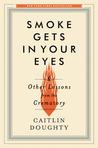
On Caitlin Doughty's Smoke Gets in Your Eyes and My Struggle with Mortality

Smoke Gets in Your Eyes: And Other Lessons from the CrematorySmoke Gets in Your Eyes: And Other Lessons from the Crematory by Caitlin Doughty

My rating: 5 of 5 stars


Amazing! Fascinating. Thought Provoking. Moving. And so very Necessary. I think the fact that it took me a couple of weeks to even get up the courage and watch an Ask a Mortician Youtube video says a lot about how much I needed this book.

I vividly remember the very moment I realized that we are all gonna die some day and how I immediatly wished to unknow this again. Of course this is the kind of thing you can never unknow again. And thus I have been struggling with mortality ever since my kindergarten days - having panic attacks on a semi-regular basis. And I waited for a good day – a day I would be able to handle these videos without plunging into another panic attack. I need not have been so worried. In fact, I could have spared myself a lot of anguish had I just gotten up the courage to look sooner. Because as it turns out the only thing that really helps with the things that you can not unknow is to know more.

And yet the approach the western world in general and - as Caitlin Doughty illustrates - america in particular takes is quite the opposite. We do everything in our power to avoid any confrontation with death. We avoid talking about it as much as possible. We hide dead bodies off stage behind the curtain. We even try to find the “cure” for it. As a history student I am well aware how bizarre it is that I managed to be alive for almost 29 years without ever having seen a dead person – even though I have been to more funerals than weddings. But the thing is, in Germany, too, these things are more like memorials nowadays. There is no dead body at a funeral anymore – only a closed coffin or an urn. And nothing actually gets buried.

So death in effect has been reduced to the absence of a person in our lives as opposed to the absence of life in a body. Without this book it never would have occurred to me how much of a difference this little distinction makes. Now I see how grossly I have misinterpreted the myth of Orpheus and Eurydice and how much we have become like the petty gods of the Iliad. I am serious. When you really think about it you'll have to admit that people in modern western societies have a lot more in common with the gods in that story than with the humans. That is because we seem to think ourselves at least potentially immortal. So deeply are we in denial about our own mortality. Yet we still die. And every time we do we experience it as essentially unnatural. Death is not part of our life. It is a glitch. We don't see it as something that needs to be accepted, but as something that needs to be fixed.

Smoke Gets in Your Eyes is the account of Caitlin Doughty's own journey towards an understanding of death and how contemporary America and by extension western societies chose to deal with it. She shows how flawed and unhealthy these attitudes really are, how they evolved alongside the rise of the funeral industry and our euphoria in face of the great advances in public health and medicine, and how we would profit from a more realistic understanding of and engagement with death. I very am glad that I got to vicariously experience this journey through the guidance of her kind and witty words. I laughed and I cried (did not have a panic attack) and I think it is fair to say that this book changed my life.


View all my reviews

March 29, 2015

On Reading and Loving Amanda Palmer's The Art of Asking

The Art of Asking; or, How I Learned to Stop Worrying and Let People HelpThe Art of Asking; or, How I Learned to Stop Worrying and Let People Help by Amanda Palmer

My rating: 5 of 5 stars


I was already about a third of the way into this book when it suddenly occurred to me that something felt different. For the first time in months I was truly absorbed in a story. Not picking apart, dissecting and judging for once. My annoying little inner critic monster had gone off and left me alone for this ride. And damn, I had not known how much I needed that time apart. I am not exactly sure what Amanda did to make him leave us alone (he has not come back to tell me yet).

Maybe it was because it did not feel so much like I was reading, but more like I was listening … or having a conversation rather (totally talking back in my head) – a very intimate conversation. Yeah, Amanda does share a lot. So much, in fact, that I found myself somewhat hesitant to read on at times, feeling like I was prying. Surely this could not be meant for my eyes. After all, what did I really know about her when I picked up this book? I had seen the TED-Talk a while ago (liked it), had heard the story about how Neil Gaiman wrote the Ocean at the End of the Lane for his wife, Amanda – did not draw any connection – and seen the video of a reading she did at Google, which convinced me that I needed to read this book like yesterday.

So while she had crossed my path a couple of times before, she had remained a passerby in the street. Registered but not seen. Now, after reading the book, it feels somehow wrong to refer to her by her last name as I would usually do in a review. Not that I would presume to know much about her based on a few intimate details. But I think I got her point. That is what is important. It gives me hope for humanity when it often seems like people are just out to cut each other's throats and tear each other's eyes out.

Don't get me wrong. She does not exactly sugar coat things. More often than not, when she lets herself fall, someone does abuse her trust. But for everyone that does there are a hundred people that don't. They just tend to fade to the background when the crook takes center stage. Just like the trolls and the haters are always so much louder than everybody else. That does not mean that there aren't any kind and compassionate people or that they are outnumbered … they just tend to be a lot less aggressive. I will make a point of picking this book up whenever I lose my faith in humanity again. And this is just one insight this book has got to give. There are many more to be had, if you pay attention.

Keep in mind, though, that despite the ever dreadful how-statement in the title, this is not a self-help manual or an expose on business tactics. If you are looking for one of those things, you have got the wrong book. It is simply a memoir. One woman's perspective. Beautifully written, remarkably insightful and incredibly moving. Excuse my gushing. I will now proceed to nurse my massive book hangover by checking out her music and possibly also the infamous blog, trying not to feel like a creepy stalker person for doing so.


View all my reviews

March 13, 2015

Letter to Myself

Dear Ponderanza,

It's been entirely too long since you have written anything on here. It's not like you don't have anything to show for your absence. You somehow managed pass your ancient Greek course as well as your final exams and wrote a pretty good thesis. But it has been three months since you handed that in. Then what?

Well, once you were finally free from work and had reconnected with your life, you found yourself staring into the impenetrable void that is your life after university. The only certainty on the horizon right now is your eventual demise, which seems uncomfortably close with nothing to block your view. You told yourself you were prepared for that. But you were kidding yourself. No, you were not prepared for this view. You were not prepared for the anxiety creeping over every aspect of your life. And you were certainly not prepared for the self doubt and feelings of inadequacy.

So you froze. You did not pick up your pen. You let your fears guide you instead. You know that those self serving monsters advise you ill. They stifle all your creativity and they will destroy what you worked so hard to build, if you let them. So there is nothing for it. You just have to pick up your pen again and write something. Even if it is just a shabby little letter to yourself.

Love Ninette


July 29, 2014

On Harry's Last Stand and Insights where You Least Expect Them

Harry's Last Stand: How the World My Generation Built is Falling Down, and What We Can Do to Save ItHarry's Last Stand: How the World My Generation Built is Falling Down, and What We Can Do to Save It by Harry Leslie Smith

My rating: 4 of 5 stars


I must admit that when I first saw this book and it's title, I assumed this would be the usual rant us younger folk expect from the elderly - you know about how easy we have it and how lazy we are and yada yada yada. So I did not bother to look any further until I saw this interview with him that justkissmyfrog posted on her youtube channel.


He was nothing like I imagined him to be. He was funny, compassionate and still so in touch. Yeah, we do not really expect that from the elderly. And as with all generalizations it is obviously not true across the board. I am a little ashamed of my initial judgement. Especially with my background I should be more aware of prejudices. But alas I realized my mistake and turned to his book for more of what he had to say.

And boy did he have a lot to say and in such a charming manner. He really lived a remarkable live that would have been a shame to be lost to oblivion. But he has got a nobler reason for telling his story than fishing for compliments or sympathy. He uses it to illustrate a point about our current state of affairs and the course we are on - not just in Britain, but across the board.

I certainly recognized some of the issues to be akin to some here in Germany. But while I for the most part did share his opinion even before I picked up this book, I never thought to look at it from quite this angle. That did help untangle some of my jumbled thoughts and see the proverbial golden thread running through. So while he does not give easy answers - neither does he claim to - I do have a little more clarity and something to orient my decisions.

Of course, whenever these things sound simple and easy answers are thrown about, you are probably not seeing the whole picture. They are always more complicated and we should be aware of that lest we comply with rash actions or unfavorable agendas.

I suppose the best we can do is to raise awareness, to not forfeit our votes - even if just to delude the less well meaning ones, to try and do more good than harm to the world around us, and, last but not least, to sometimes look beyond our prejudices. We might just hit upon gold where we would least expect it.


View all my reviews

July 9, 2014

On Never Ever Growing Up

I very vividly remember how I told my mom one night when she was tugging me in that I never ever wanted to grow up. And this was not just me being hung up on Peter Pan. I actually meant it ... and I kind of still do.

Back then there were just so many things about grown-ups I was terrified of and things they did I thought I could never do on my own. Like doing my hair and driving a car or dancing in public (unchoreographed that is, like in a club) and all that stuff in between. But bid by bid I learned to do those things or had those experiences and it turns out that some of them are actually a lot of fun.

So do I feel like a grown up now? No. Not yet. And I am actually starting to suspect that I never will. It seems like for every milestone I leave behind another two are rising up before me. Life apparently is not the kind of game where you reach the final level and you have won. There will always be new challenges to tackle. Challenges that are going to make me feel like that scared little child over and over again. Maybe a child that is a little more mature than it's younger version, but a child nonetheless.

So the number of my age gets farther and farther removed from the age I feel. To the effect that I now earn alarmed looks whenever I have to actually think a moment to give my age or even get it wrong. Except today on my birthday, when I will be very aware and weirded out by that stranger of a number.


June 29, 2014

Me and Mrs. Dalloway

Mrs. DallowayMrs. Dalloway by Virginia Woolf

My rating: 3 of 5 stars


I have got to say up front that Mrs. Dalloway put me through the most difficult reading process I ever made it through (and I have read a lot of academic texts, Egyptian tomb inscriptions and stuff). That was not because it is a bad book. It is because Mrs. Dalloway is not so much a book in the conventional sense with plot and such. It is basically a herd of consciousnesses invading your mind and running rampant. It is often hard to follow whose head you just switched into. It is somewhat like what I imagine being a mind reader must feel like. It's so utterly exhausting; like you wouldn't believe. I had to stop and take a break about every 30 pages and re-motivate myself to move on.

But while it was painful and hard to get through, it was also very rewarding and worth the effort in the end. It is hard to believe that this was first published in 1925. I mean, for example, how could this women so accurately (from what I understand at least) describe PTSD and recognize it as the serious illness that it is - long before it even became a diagnosis? And how come that it took the medical community so much longer to come to that same conclusion? (Their arrogance again and again their stupid arrogance. Like Woolf rightly recognized. And most infuriatingly still, they just don't learn from that mistake ever, it seems. Not from this. Not from the whole “gentlemen's-hands” debacle. Never. But I digress.)

All that would have been remarkable enough on it's own, but that is actually not the only issue she is surprisingly spot on about – again especially considering when this was written. She manages to step into the heads of all these characters and accurately portray them; young and old, male and female, everyone unique and life-like (i.e. with real issues); it's baffling. It makes me wonder if my paranoia about some people maybe being able to read my thoughts might have been justified after all …


View all my reviews

March 18, 2014

On Grief


Grief is a somewhat curious process. It is definitely not this step by step process they say it is. It's not like you master one level and go on to the next. At least for me it is not. What really happens is more like flipping back and forth between the stages. Like you think you grasp this new reality now and you're mind is otherwise occupied for a while or you sleep, but then you look up and - wham - it hits you again and you are right back where you started.

Then you are back to asking yourself if this really is the new reality now? If this is a world now in which this person no longer exists? Or if it has all just been a bad dream? Which might sound like a horrible cliche, but it is how I feel - or at least the most fitting articulation of this feeling that I can think of. Or maybe I think of it, precisely because it is such a cliche and my mind is just so occupied processing the new reality and in no condition to come up with more original expressions.

However that may be, it is not the worst part of the experience. The worst part is not even the guilt about all the bad things you ever thought or said about them. That will go away pretty soon. No, the worst part is the self-deprecating question of whether or not you were close or invested enough to justify your pain – no matter how close or closely related you actually where, I might add. And I don't know if this is just me or if other people feel this as well, because this is the particular monster I never dare to touch upon in conversations. Funerals are the habitats it really thrives in - among all those other people and their pain and anecdotes about things you were hitherto totally oblivious about - there and then it gets its biggest growth spurt. And this monster stays with you even after the worst of the pain has passed. And its company makes the next of its kind thrive even better. Maybe that is one reason why I get so much more affected the older I get and the more people cease to be.

I remember my first funeral. It was a somewhat distant relative that I had seen a couple of times, but was never close to. My grandmother said it would be good for me to come for “practice.” So that it would not be as bad when it was someone that had mattered more. She could not have been more wrong. This is not the kind of thing you can practice. I know that now. I don't know if she does.

I have been to several funerals at this point and merely one wedding. What does that say about me? I study cultures from the past – their relationship with their dead and funeral rites among other things. And I have come to think that funerals are more for the living then they are for the dead. The question is for which of the living? Not me, evidently, because funerals do not give me closure or comfort like I know they do for some other people - on the contrary. My grieving and healing happens elsewhere in much more private venues and rituals.

January 20, 2014

On Why Hogwarts is a Terrible School

So I've just read the Harry Potter Books ... for the first time. It's 2014. I know I've been late to the party - as usual. I had my reasons. Anyway, now that I've read the books, liked them and look at the fandom, I kind of wonder ... am I the only person who wouldn't want to go to Hogwarts?

I just don't think it would be such a nice place to be if one actually went there. For one thing, there is the division into different houses. What does that do, besides creating animosity - especially since they have them competing against each other for the House and Quidditch Cup. I guess some would argue that shared goals and responsibilities make the students within every one house bond and look after one another. But we see in the books that it doesn't work quite like that - as was to be expected. Because, you see, when somebody messes up and jeopardizes the victory they're gonna have a pretty hard time in their own house. And inter-house friendships prove to be rather difficult to maintain, since there hardly is any neutral place to hang out. You're likely not going to sit with people from other houses during meals. You can hardly have a conversation in the library. And besides that, where in the castle could people from different houses hang out? You're left with the grounds or the toilets, maybe the Room of Requirement.

And this is, I think, where the crux of the matter lies. You're not really supposed to mingle. The division of the houses is really sort of a divide and conquer strategy. One that has clearly gotten out of hand, since the teachers are as invested in the rivalry as the students are and even the parents. Because to many parents it is very important that their children end up in the "right" house - as illustrated by Sirius Black. And though the Weasley's wouldn't have been quite as harsh as that, had any one of the kids ended up in a different house, it would have surely impacted his status in the family. Because this isn't just about where you're dormitory is, it's basically a stigma. If you end up in Slytherin, people from other houses are going to assume that you're a criminal in the making. And people from your own house are going to make sure that your believes line up, if they don't already do. I think this system was largely responsible for the failure of Snape and Lily's friendship and why he ultimately ended up with the Death Eaters.

The other things that really bothers me about Hogwarts are the curriculum and the teaching methods. I find the curriculum rather narrow. It's almost entirely devoted to the use of magic (or magical creatures and substances), whereas the questions of understanding magic, ones own origins or the world at large hardly get touched - even in such subjects as History of Magic, Care of Magical Creatures and Muggle Studies. Neither seems critical reasoning much encouraged. It is not surprising therefore that even "good" wizards such as Ron hold some rather alarming believes and attitudes. And that despite the fact that most wizards have Muggle relations, not even the people from the ministry's Muggle related departments understand the most fundamental things about them or other magical creatures for that matter.

In general there seems to be hardly anyone concerned about ethics. The teachers only make their students brew the potions, practice the charms and what not. They hardly provide any context or caution. The best wizard according to Hogwarts standards is the one who can use magic to the greatest extent and in the most complicated ways - not the one who uses it most wisely. There is no real discourse on the line between use and abuse, which also makes the subject of Defence Against the Dark Arts hard to define, since the Dark Arts themselves are kind of a wishy-washy concept. There is some general idea that they are magical implements that are clearly intended to be used to somebody's disadvantage. But that could be said about most magical practice. And it is clear that even the unforgivable curses are not exclusively used by bad people. Hell, Harry himself uses two of the three.

Then there are the teaching methods. In general Hogwarts seems to operate under the false assumption that when you are good at something you are also good at teaching it. That is obviously not the case as nicely illustrated by Professor Binns, who holds his History of Magic monologues barely even aware of the students' presence, as well as Snape, who just writes the potions recipes on the blackboard and makes them hand in the results at the end of each lesson. And the essays they have to do for almost every subject are usually not more than senseless occupational therapy. Though, to be fair, on that particular account Hogwarts probably doesn't differ all that much from regular schools, but for the fact that the essays are for the most part mere practical recitations of the how-to-variety rather than critical reflections. The other very Hogwarts-specific problem is that the teachers - especially the heads of houses - have got an underlying agenda and hardly even make a show of treating students equally fair to put it mildly.

All in all I think Hogwarts, though certainly a fascinating place, is not a great environment if your ambition is to become a well educated and responsible wizard. In a way it is like our schools on steroids, but we at least get taught where we come from and how we work - usually that is.

January 12, 2014

On New Year's Resolutions


The Year is already a couple of days old by now and I still keep getting bombarded with New Year's Resolutions left and right. Though I find some people's resolutions rather interesting to know, I'm not a big fan of them. I've never made any actually. I have goals, all right, but they tend to kind of evolve rather naturally all year round and I adjust them once I see how things are going. Because with most goals you tend to under- or overestimate the difficulties you'll be facing. There are always things you just can't foresee and you need your goals to be flexible enough to take that into consideration.

That's also one of the reasons I don't like telling people about my goals at first. It puts you in that all or nothing mindset, because they'll hold you to what you said.  So that instead of being proud of the progress you have made towards your goal, you'll feel like you failed and give up all together. And then there's also some evidence that suggests that for people who are in it for the social appraisal - or whatever you want to call it – the declaration of the goal and the ensuing admiration from other people are satisfying enough and they might not even bother to get started. Like displaying pretentious books that you never intend to read on your shelves. I don't know, if I ever done something of that kind. I don't think so, but my adolescent self was kind … well, I don't get what she was thinking most of the time. And people tell me things that I can hardly believe. So I wouldn't entirely rule it out. It's like I've been possessed for a really long time. Evil spirit be gone.

However, I didn't achieve everything I wanted to before the New Year, but I don't see that as a failure. It's not like I haven't achieved anything. It just means that it's an ongoing process. And considering the circumstances, I'm actually quite satisfied with what I've managed to accomplish last year.

December 11, 2013

On the Difference between Meaning and Translation


With all the language studying and teaching I'm doing this year, I noticed that there is one problem that just keeps popping up again and again. That is the misconception among many language learners that the meaning of a sentence is it's translation. People keep asking what something means, when they are really asking for a translation. I tend to get a lot of puzzled looks when I ask them to make the distinction. Because people who are not fluent in a language tend to extract the meaning from the translation rather then the original word or sentence. They take a detour, if you will. And they don't grasp that their native language is a tool in that process, not the objective. I guess it is especially hard when you learn your first foreign language, to wrap your head around the idea that your native language is not the ne plus ultra of communication.

The thing is though, that any given language system encodes meaning independent of another language system, which is why at a certain point in learning you won't need the help of your mother tongue to decode the meaning. And despite the fact, that we tend to equate grammatical phenomena as much as possible across languages, there are in every language certain things that you can't quite imitate in every or most other languages. This is what gets lost in translation.

For example, when I want to greet someone in German by saying “Hello, nice to meet you,” unlike in English, I have to convey meaning about the nature of my relationship to that person. I have to decide whether or not to address them formally or informally. And this can have far reaching consequences. Say, for example, I meet someone in a business setting and he uses the informal pronoun “du” (which is something that happens all the time because I'm female and look a little younger than I am). Well, big deal you might say, it's just a tiny little word. But with that tiny little word he has just put me in somewhat of a loose loose situation. He is basically patronizing me. I can now either say nothing and let him patronize me or call him out, which will probably have a negative impact on my future relations with him and everyone to whom he communicates that I'm kind of 'difficult'. This is even more detrimental when said person is above me in the hierarchy. Because in that case I still have to address him formally regardless of how he addresses me and if my male coworkers - whom he is addressing formally - take note of that, they'll assume superiority regardless of our job descriptions or performance. And there you have your worst case scenario. So tiny word – major implications.

Long story short to really understand a language you have to grasp these nuances and be aware of them regardless of whether or not you can recreate them in translation. Because it's the meaning your after.

November 18, 2013

On The Manic Pixie Dream Girl Trope and Paper Towns

Paper TownsPaper Towns by John Green

My rating: 4 of 5 stars


I've heard quite a few people criticize Paper Towns for being the cliche manic pixie dream girl story. Having read it myself, that kind of makes me wonder … have we read the same book? I mean, of course it is all ABOUT the manic pixie dream girl trope, since the whole thing is an attempt do discredit this trope. And Green could hardly have been more obvious about it. If anything, I would criticize him for this obviousness. That's somewhat of a reoccurring theme of his (among others). And it might stem from crafting a novel around a concept or idea – like fables or fairy tales – rather than letting the story evolve from the characters. But lots of people do this, and you can usually tell. It's a matter of personal preference whether one likes one or the other approach better. I personally enjoy both kinds of stories.

The most interesting thing about his endeavor is the approach Green took to attack the trope. He could have done it in loads of different ways. But he chose to basically build Margo up as a manic pixie dream girl, only to reveal in the end that it's all just been in Q's head. I think that's why a very cursory reader might mistake this for the actual trope. And in fact, one might wonder what the big difference is? Because that sounds like she basically serves the same purpose that every manic pixie dream girl does: helping “broodingly soulful” Q learn a life lesson that is going to be key to finding his own happiness. Now how's that for a conundrum? A manic pixie dream girl dispelling the myth of the manic pixie dream girl. Except, that's not quiet it, because unlike other manic pixie dream girls, Margo also learns a valuable lesson from the whole fiasco.

I think there is a rather strong indication – indication as in Green spells it right out (That's the obviousness I've been talking about.) - that Margo herself is initially somewhat infatuated with the idea of being someone's muse or manic pixie dream girl. And she initially sets herself up as one. She makes an effort to plant the idea in Q's head, and thinks the thing is done. She thinks she did something to effect an important change in someone's life, meaning that by extension she herself was important in this life she left behind – something she's been doubting for obvious (again) reasons.

What she doesn't reckon with, is how this idea evolves inside Q's head, leading him to recreate her into this larger than life “precious thing” that he needs to save, effectively making him her hero. So essentially they both want the same thing. And that's a problem. Because in order for one of them to be the hero and safe the other, one of them will have to be the damsel in distress. Neither of them identifies as such.

So when they finally meet again, they're both confronted with the implications of what they attempted to create. They learn to see each other as real life people rather than mere tropes and means to an end. And they both realize – Margo a little sooner than Q actually – that a muse or manic pixie dream girl is not what an actual person is, but merely the two dimensional unattainable thing another person makes them out to be – unattainable because real people in all their complexity can never achieve the level of simplicity a fantasy needs to be unambiguously positive.


View all my reviews

November 4, 2013

On the Supposed Demigods in White


It's been way too long since I have written a post – two weeks now, in fact. Two weeks in which I have sadly been way too preoccupied freaking out about the dentist appointment I've just had ... looking up the procedure and all possible complications ... imagining all kinds of horrible scenarios … you get the picture.

The blog wasn't the only thing I neglected for this, but it thankfully didn't affect my studies too much. Yeah, the summer is over and classes have resumed. The good news is that I started off rather well, because when it comes to reigning in obsessive thoughts, it's much better to give my brain something to focus on – like language studies – than to let it roam freely – like I do when I write. And it just so happens that I'm doing a lot of language studies this year.

However, the more interesting question here is, where this panic comes from. Because weirdly enough it doesn't stem from some horrible dentist experiences. I haven't really had those. Thank god! In fact, I haven't experienced much on the doctors front at all – much less than most people I know – as has been repeatedly pointed out to me these past weeks.

I have, however, time and time again seen doctors employ diagnostic processes that looked a lot more like guessing games than educated opinions. Not only that, but when I look at my circle of friends and acquaintances there is hardly anyone who hasn't been subjected to some kind of medical malpractice. But even though they might still suffer the consequences, their trust in doctors seems unshaken - a lot less shaken than mine at least.

To most of them doctors are still demigods in white. I just can't muster this kind of blind faith. What comes to mind when I think about doctors are their failures, both in the here and now and in historical times - because history major, you know. And most infuriating thing is that despite all this evidence they still got this disgustingly condescending air about them. Think 'doctors are gentlemen, and gentlemen's hands are clean.' Also, they may have studied medicine all they want, but what good is that, if they don't even know how to listen to what their patients tell them – if they don't even ask the right questions?

Speaking of studying medicine, seeing medical students in their natural habitat didn't help much to strengthen my trust either. Because at university they look as much as demigods as you and I. And in fact, when it comes to academic bulimia they're among the worst offenders. So long story short, even though I might be kind of a hypochondriac, when it comes to doctors, I'd rather keep my distance and double check everything before I commit to anything.

October 19, 2013

On Really Bad Advice


When I hear people apologizing for how lame of a phrase “It'll get better” supposedly is, all I can muster is a rueful smile. Because you know what I always got to hear? Something along those lines: “The time will come when you're gonna wish yourself back to this very time of your life.” Well, if that doesn't make you cheer up and appreciate what you have. What it did was make me feel kind of guilty for being unhappy in the first place. And then there is the implication in this statement that it is - apparently - only gonna get worse – much worse. So that should make you wanna get up in the morning or, you know, like just put an end to it right away.

But the thing is, that this is - of course - not quite what the folks were saying. In fact, they weren't talking about me and my problems at all. They were essentially projecting the feelings they had about their own schooldays onto me. Apparently they did fare a lot better than I did. Go figure. And it seems like they couldn't even imagine that it might be different for me. I did realize this back then, but that didn't make the statement any less annoying and hurtful. I mean it would have helped a lot, if someone had just acknowledged my experience for starters.

Now I at least get the triumph of saying that they were wrong. It didn't get worse. It got infinitely better - even though I'm still sort of in limbo at the moment. But I wouldn't wanna go back to this time of my life if you gave me a truckload of cash for it. And I'm damn well never ever gonna be going to any reunion. I just hope there will never come a time when I'd wanna do go back because I'd pretty much have to hit rock bottom to get to that point.

October 9, 2013

On Language Learning and Self-fulfilling Prophecies


A while back I wrote a post about how it's not your teacher's responsibility for you to learn something, but your own. So for the past few weeks I've been following my own advise and tackled my french, which after four years of language learning in school was rudimentary at best. I'm happy to report that it's going quite well. Much much better than it ever did in school. And along the way I have formed some ideas about why that is.

There are of course some technical drawbacks to the approach we took in school. The focus on grammar at the expense of exposure being a major one of those. I believe we never even got to hear a native speaker until we were already about two or three years into our studies. And it turns out our teacher's pronunciation was anything but decent. Another one would be the lack of context clues when it came to vocabulary learning. Because lists of pretty much random words are an unnecessarily inefficient form of learning material.

These are some of the reasons that usually get cited when we wonder why kids are doing so poorly in their language studies. But I think that's only scratching the surface. I believe these wouldn't actually be that much of a problem – or rather that students could easily remedy those themselves. The thing is, though, that the root of the problem goes much deeper.

I just now discovered what the two biggest obstacles to language learning I faced back in school actually were: the class environment and the low expectations of our teacher and subsequently of ourselves. I think those two were actually reenforcing each other. Let me paint the scene for you.

It was just after our advancement to secondary school. I was one of the few who had actually chosen the science program because it came with the french classes and not the other way around. And some kids, I think, were just there because their parents had forced them into it. So you could say that roughly two thirds of this class had no motivation at all to learn french and our teacher didn't provide any either. On the contrary, she greeted us with an introduction on how difficult this class was going to be and how much hard work we were required to do. Needless to say this speech probably did more harm than good for the few of us who had up to this point actually been somewhat enthusiastic about the endeavor.

Also, since we were all still in the process of finding our place in this thrown together group of kids, you can imagine that there was a lot of disruptive behavior going on. Some kids tried to distinguish themselves by being very loud and wisecracking, others thought it was cool to act up to authority figures. You get the picture.

So this coupled with the very inefficient grammar focused approach to language learning led to very poor results. These in turn frustrated both the students and the teacher, and lead to the latter thinking very poorly of her students' abilities in general, which she didn't attempt to hide. All this served to create the illusion that language learning in general and learning french in particular was much harder than it actually is. In this kind of environment and the mindset it creates it is no wonder that people wouldn't even dream of achieving fluency.

So long story short the problem with school was not so much what I didn't learn than what I did. Namely that language learning is hard and I couldn't expect more of myself than merely scraping by – like most kids were doing. After all this was the general consensus not only in school, but in the whole of society. It essentially became a self-fulfilling prophecy until I – pretty much by accident – became fluent in English. Because if you spend a lot of time on the Internet, you'll have a hard time getting around it. After all more than 50% of online content is in English. And if you're too impatient to wait months longer for the translation of your favorite book series' next installment than the English speaking world does, you might just consider to get the freaking thing and figure out what's in there. But even then the lesson was so internalized that I thought of English as more of an exception – a sort of fluke. After all it didn't feel like I had put all that much effort into English learning. It just sort of happened?!

What this little tale ought to show is that teaching methods aren't the only problem here. There are other things at play that are much much more destructive, because they are so deeply engrained in the system and play on your subconscious to create mental barriers. And language learning isn't the only school subject to suffer this curse. I'd say that almost all of them are afflicted in varying degrees. When have you first heard how hard math is?

It has taken me years to even begin to repair this damage and find my way back to the curious, hungry for knowledge girl that I once was. And although I am well on my way now, I'll probably still have a long long way to go. After all you don't just cast off that kind of conditioning over night.